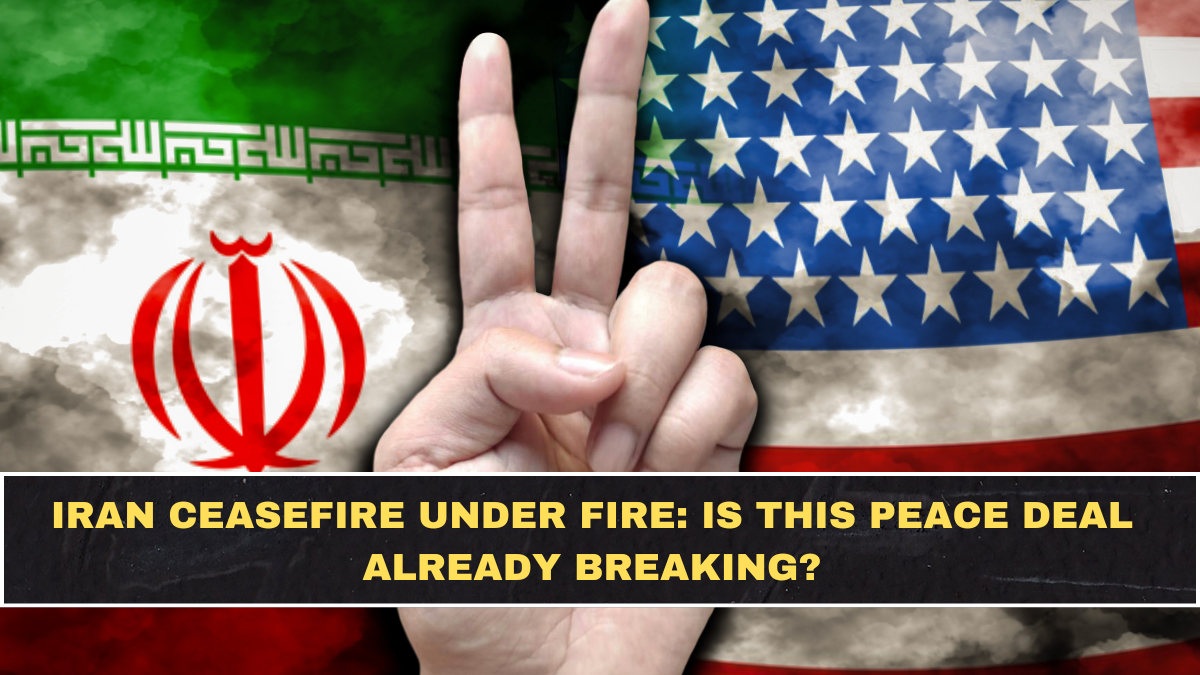
The Iran ceasefire violation row has become one of the biggest global flashpoints because both sides are still claiming control while firing has already resumed near Hormuz. That is the dangerous part. A ceasefire is supposed to reduce military action, but the latest exchange shows the agreement is fragile, confusing and possibly only alive on paper.
Reuters reported that the US carried out retaliatory strikes on Iranian military targets after what Washington described as Iranian attacks on American forces. Iran, on the other hand, accused the US of violating the ceasefire by targeting ships and civilian areas near the Strait of Hormuz. So the problem is not only the firing; the problem is that both sides are building completely different stories around it.
What Happened Near Hormuz?
The latest tension reportedly began when US destroyers moved through the Strait of Hormuz and came under missile, drone and small-boat attacks. The US military said it responded with strikes on missile sites, drone launch locations, command centres and surveillance infrastructure. Washington also said no American assets were hit, which it used to frame the response as controlled and defensive.
Iran rejected that version and accused the US of striking two vessels and civilian coastal areas, including locations near Qeshm Island and other coastal regions. This is where the ceasefire becomes difficult to judge. If both sides say they are only responding, then each new strike can be sold domestically as defence while looking internationally like escalation.
| Claim | US Version | Iran Version |
|---|---|---|
| Who broke the ceasefire? | Iran attacked first | US attacked first |
| What was targeted? | Iranian military infrastructure | Ships and civilian areas |
| Is the ceasefire dead? | No, still in effect | US violated it |
| Main danger | More attacks on US forces | Wider regional escalation |
| Market impact | Oil and shipping fear | Gulf security panic |
Why Is Trump Still Saying Ceasefire Holds?
President Donald Trump has insisted that the ceasefire remains in effect even after the US-Iran exchange near Hormuz. That message is politically important because admitting the ceasefire has collapsed would increase pressure for a stronger military or diplomatic response. By saying the deal still holds, Washington can argue that its strikes were limited retaliation, not a full return to war.
But this is where the logic becomes thin. A ceasefire that survives only because both sides refuse to officially declare it dead is not strong peace. It is a temporary pause full of loopholes, blame games and military warnings. If another clash happens, the same excuse may not work again.
Why Does Hormuz Make This Worse?
Hormuz makes everything more dangerous because it is not just a military zone; it is a global energy route. Any firing near this strait creates fear around oil tankers, LNG carriers, shipping insurance and global fuel prices. That is why even a limited exchange can become an economic shock very quickly.
Al Jazeera reported that the US and Iran traded fire in Hormuz amid ceasefire tensions, while Iran accused the US of breaching the ceasefire and CENTCOM said American forces responded to Iranian attacks. This means the conflict is now sitting exactly where the world cannot afford uncertainty: near one of the most important shipping chokepoints on Earth.
What Are The Warning Signs Now?
The biggest mistake would be assuming that “ceasefire still in effect” means everything is under control. That is lazy thinking. The real test is not what leaders say in public, but whether military action stops, shipping becomes safer and both sides avoid fresh retaliation.
Watch these signals closely:
- More attacks on US destroyers, tankers or Gulf shipping routes
- Iran officially declaring the ceasefire broken
- Trump authorising larger strikes beyond “retaliation”
- Oil prices rising sharply after new Hormuz alerts
- Gulf countries reporting drone or missile interceptions
- Pakistan or other mediators failing to revive talks
Conclusion?
The Iran ceasefire is not fully dead, but it is clearly under heavy pressure. Both sides are still using the language of restraint while accusing each other of breaking the deal. That may help them avoid admitting failure, but it does not make the situation stable.
The blunt reality is this: if missiles, drones and naval strikes continue near Hormuz, the ceasefire becomes more of a political label than a real peace deal. For the world, the danger is not just another US-Iran clash. The bigger danger is that one mistake in Hormuz can hit oil prices, shipping routes, Gulf security and household budgets far beyond the Middle East.
FAQs?
Did Iran Break The Ceasefire?
The US says Iran attacked American forces first, while Iran says the US violated the ceasefire by targeting vessels and civilian areas. So, there is no single accepted version right now. What is clear is that both sides exchanged fire near Hormuz, which has put the ceasefire under serious pressure.
Is The US-Iran Ceasefire Over?
Officially, the ceasefire has not been declared over by the US, and Trump has said it remains in effect. However, fresh strikes make the agreement look extremely fragile. A ceasefire can technically exist while still being weakened by repeated violations and retaliation.
Why Is The Strait Of Hormuz Important In This Crisis?
The Strait of Hormuz is one of the world’s most important oil and gas shipping routes. Any military activity near this area can affect tanker movement, insurance costs and global oil prices. That is why the Hormuz clash is being watched far beyond the Middle East.
Can This Crisis Affect India?
Yes, India can be affected if oil prices rise or Gulf shipping becomes risky. India imports a large amount of crude oil, so tension near Hormuz can increase pressure on the rupee, inflation and fuel expectations. The impact depends on whether the conflict stays limited or escalates further.