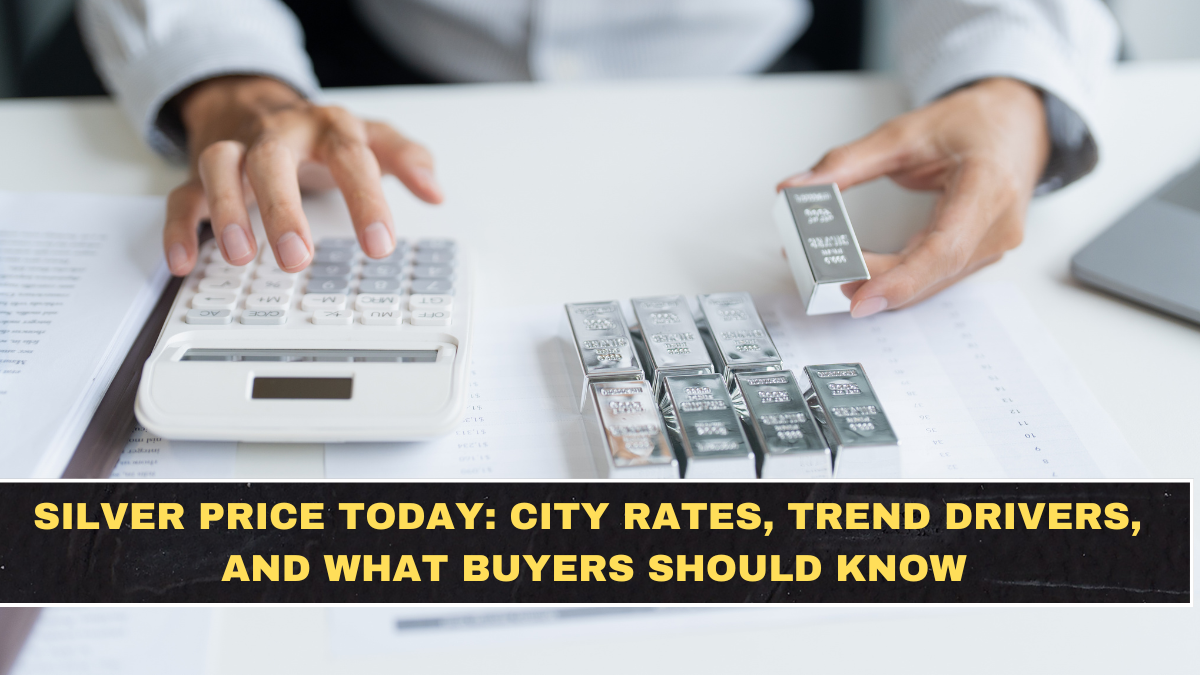
Silver prices in India fluctuate daily based on global spot rates, currency movement, and domestic demand. While the base price is influenced by international markets, city-wise variations occur due to transportation costs, local dealer margins, and regional demand patterns. Major cities like Delhi, Mumbai, Chennai, Hyderabad, and Kolkata usually reflect similar trends, with minor differences in retail pricing.
Investors and buyers should remember that quoted retail prices may exclude making charges or dealer premiums in the case of coins and bars. Checking updated city rates before purchasing helps avoid overpaying, especially during periods of high volatility in global commodity markets.

Why Silver Prices Are Moving Right Now
Silver prices are influenced by both investment demand and industrial consumption. Unlike gold, which is primarily a safe-haven asset, silver plays a significant role in industrial applications such as electronics, solar panels, electric vehicles, and manufacturing components. This dual demand makes silver more sensitive to global economic data.
If global manufacturing activity strengthens, silver often rallies due to higher industrial demand. However, if economic uncertainty rises sharply, silver may move in tandem with gold as investors seek safety. Currency fluctuations, particularly the rupee’s movement against the US dollar, also impact domestic silver prices in India.
Spot Trend and Short-Term Direction
Short-term price direction in silver depends heavily on global spot market movement. Traders closely monitor international futures markets and commodity exchanges to gauge momentum. When silver breaks above key resistance levels with strong volume, it may signal continued upward movement.
On the other hand, if silver fails to sustain higher levels and drops below support zones, short-term correction can follow. Due to its higher volatility compared to gold, silver often experiences sharper percentage swings in both directions. Investors should be prepared for faster price changes.
Silver as an Investment: What to Consider
Silver can serve as a diversification tool within a broader portfolio. However, it should not dominate your allocation due to its higher volatility. Investors often allocate a smaller percentage to silver compared to gold.
Before investing, consider your time horizon and risk tolerance. Short-term speculation requires active monitoring, while long-term allocation should focus on gradual accumulation rather than timing daily price swings. Silver tends to perform well during economic expansion phases but may underperform during prolonged slowdowns.
Gold vs Silver: Which Is Better Right Now?
Gold and silver behave differently despite moving in the same broad direction during global crises. Gold is more stable and defensive, while silver offers higher upside during economic recovery phases. If inflation concerns dominate markets, both may benefit, but silver’s industrial demand component adds an extra variable.
Investors should not treat silver as a direct substitute for gold. Instead, it works better as a complementary allocation. Choosing between the two depends on your financial goals and tolerance for volatility.
Key Factors to Watch in the Coming Weeks
Several factors will likely influence silver prices in the near term. Global manufacturing data, central bank interest rate decisions, currency movement, and geopolitical tensions remain primary drivers. Any sharp shift in global growth expectations can trigger strong price reactions.
Monitoring international commodity trends alongside domestic currency movement provides better clarity than reacting to intraday fluctuations. Long-term investors should focus on macro trends rather than short-term noise.
Different Ways to Invest in Silver
Investors have multiple options beyond physical silver. These include:
-
Silver ETFs
-
Commodity mutual funds
-
Silver futures (for experienced traders)
-
Physical coins and bars
Each option carries different liquidity, storage, and risk considerations. Physical silver requires secure storage, while ETFs offer easier liquidity. Choosing the right method depends on your investment objective and experience level.
Conclusion
Silver price today reflects a mix of global spot movement, industrial demand expectations, and currency fluctuations. While city rates vary slightly, the overall trend follows international commodity markets. Due to its dual role as both an industrial metal and investment asset, silver tends to be more volatile than gold.
Investors should approach silver with a clear allocation strategy rather than chasing short-term spikes. Proper diversification and disciplined accumulation reduce the risk associated with its price swings.
FAQs
Why is silver more volatile than gold?
Silver has both industrial and investment demand. Changes in global manufacturing outlook can cause sharper price movements compared to gold.
Do silver prices differ across Indian cities?
Yes, small differences arise due to local dealer margins, logistics costs, and regional demand conditions.
Is silver a good long-term investment?
Silver can be a useful diversification tool but should form a smaller portion of your portfolio due to higher volatility.
What affects silver prices the most?
Global economic growth expectations, industrial demand, currency movement, and investor sentiment are the primary drivers.