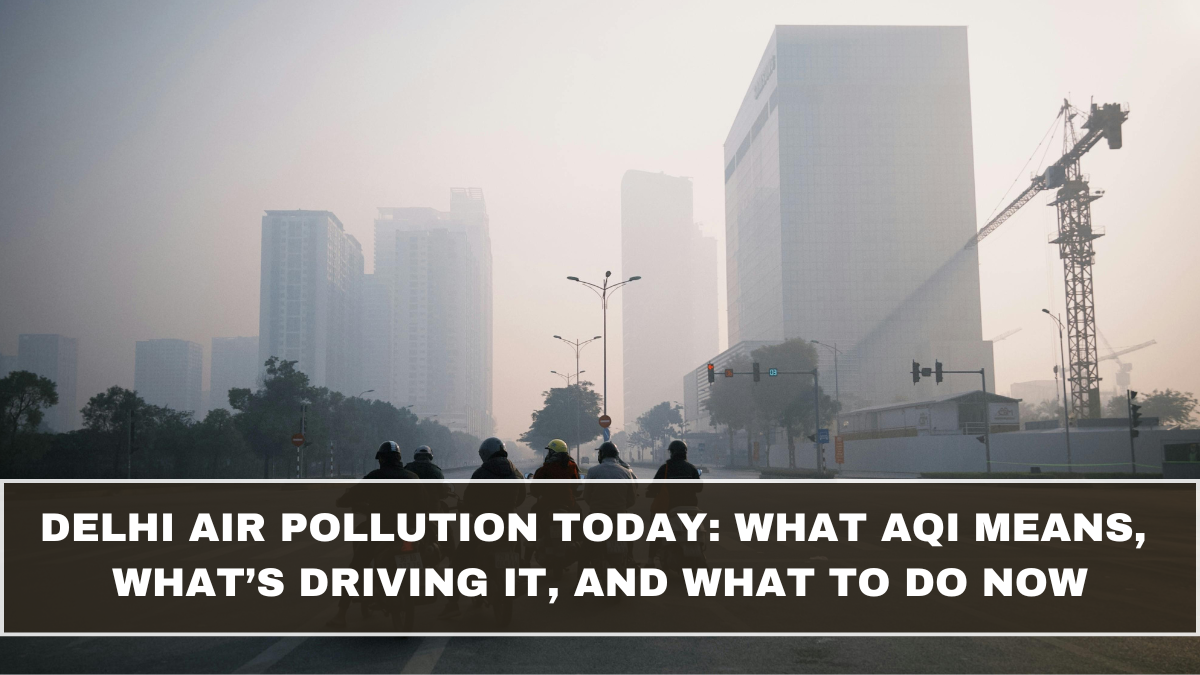
Air pollution in Delhi has become a recurring public health concern, especially during winter months. When people search Delhi AQI today, they usually want to know whether it is safe to step outside, send children to school, or exercise outdoors.
Let’s break it down clearly with data-backed explanations.
What Is AQI and What Do the Numbers Mean?
AQI stands for Air Quality Index. It converts complex air pollution data into a single number scale.
| AQI Range | Category | Health Impact |
|---|---|---|
| 0–50 | Good | Minimal impact |
| 51–100 | Satisfactory | Minor breathing discomfort for sensitive people |
| 101–200 | Moderate | Breathing discomfort for lung/heart patients |
| 201–300 | Poor | Discomfort with prolonged exposure |
| 301–400 | Very Poor | Respiratory illness risk on prolonged exposure |
| 401–500 | Severe | Affects even healthy people |
When Delhi’s AQI crosses 300+, it enters the Very Poor to Severe category.
What Pollutants Are Driving Delhi’s Poor AQI?
The AQI is calculated based on multiple pollutants.
| Pollutant | Source | Health Risk |
|---|---|---|
| PM2.5 | Vehicle exhaust, construction dust | Deep lung penetration |
| PM10 | Road dust, industry | Respiratory irritation |
| NO₂ | Vehicles, power plants | Lung inflammation |
| SO₂ | Coal burning | Breathing problems |
| Ozone (O₃) | Sunlight + pollutants reaction | Chest pain, coughing |
Fine particles like PM2.5 are especially dangerous because their diameter is extremely small.
massdensityvolumerelationmass density volume relationmassdensityvolumerelation
Smaller particles remain suspended in air longer and enter the bloodstream through lungs.
Why Does Delhi Pollution Worsen in Winter?
Several seasonal factors combine:
• Temperature inversion traps pollutants near the ground
• Stubble burning from neighboring states
• Increased vehicle emissions
• Construction dust
• Firecrackers during festive season
Low wind speeds prevent dispersion, causing pollution to accumulate.
Real-Time Monitoring: What Should You Track?
When checking Delhi AQI today, monitor:
| Metric | Why It Matters |
|---|---|
| PM2.5 Level | Most harmful pollutant |
| AQI Trend (Rising/Falling) | Indicates worsening or improving conditions |
| Wind Speed | Higher wind = better dispersion |
| Humidity | High humidity can worsen smog |
You can track AQI via CPCB dashboards and weather apps.
Practical Precautions That Reduce Exposure
When AQI is Poor or above:
• Avoid outdoor exercise
• Wear N95/N99 masks
• Use indoor air purifiers
• Keep windows closed during peak pollution hours
• Stay hydrated
• Use car air recirculation mode
For children, elderly, and asthma patients, limiting outdoor exposure is critical.
Health Impact Data Overview
| Exposure Duration | Possible Effects |
|---|---|
| Short-term | Coughing, throat irritation, headaches |
| Medium-term | Reduced lung function |
| Long-term | Asthma, heart disease risk, chronic respiratory issues |
Medical studies consistently show PM2.5 as the biggest long-term risk factor.
Government Measures Often Implemented
During severe AQI periods, authorities may introduce:
• GRAP (Graded Response Action Plan)
• Odd-even vehicle rule
• Construction bans
• School closures
• Water sprinkling on roads
These are temporary but aim to reduce peak pollution load.
Conclusion
Delhi air pollution remains a serious but manageable risk if monitored carefully. Understanding AQI categories, pollutant sources, and protective steps helps reduce personal exposure significantly.
While long-term structural reforms are necessary, individuals can minimize immediate health risks by tracking AQI daily and adjusting activities accordingly.
FAQs
What is considered a dangerous AQI level in Delhi?
AQI above 300 (Very Poor) is considered dangerous, especially for children and elderly.
Is PM2.5 worse than PM10?
Yes, PM2.5 particles are smaller and penetrate deeper into lungs.
Should I exercise outdoors when AQI is 250?
It’s better to avoid intense outdoor activity when AQI is above 200.
Do air purifiers really help?
Yes, HEPA filter purifiers significantly reduce indoor PM2.5 levels.
Why does pollution suddenly spike at night?
Temperature inversion and lower wind speeds trap pollutants closer to ground level.